Let’s be honest for a second.
The biggest challenge in digital advertising today isn’t targeting.
It’s not creatives.
And it’s definitely not budget.
It’s attention.
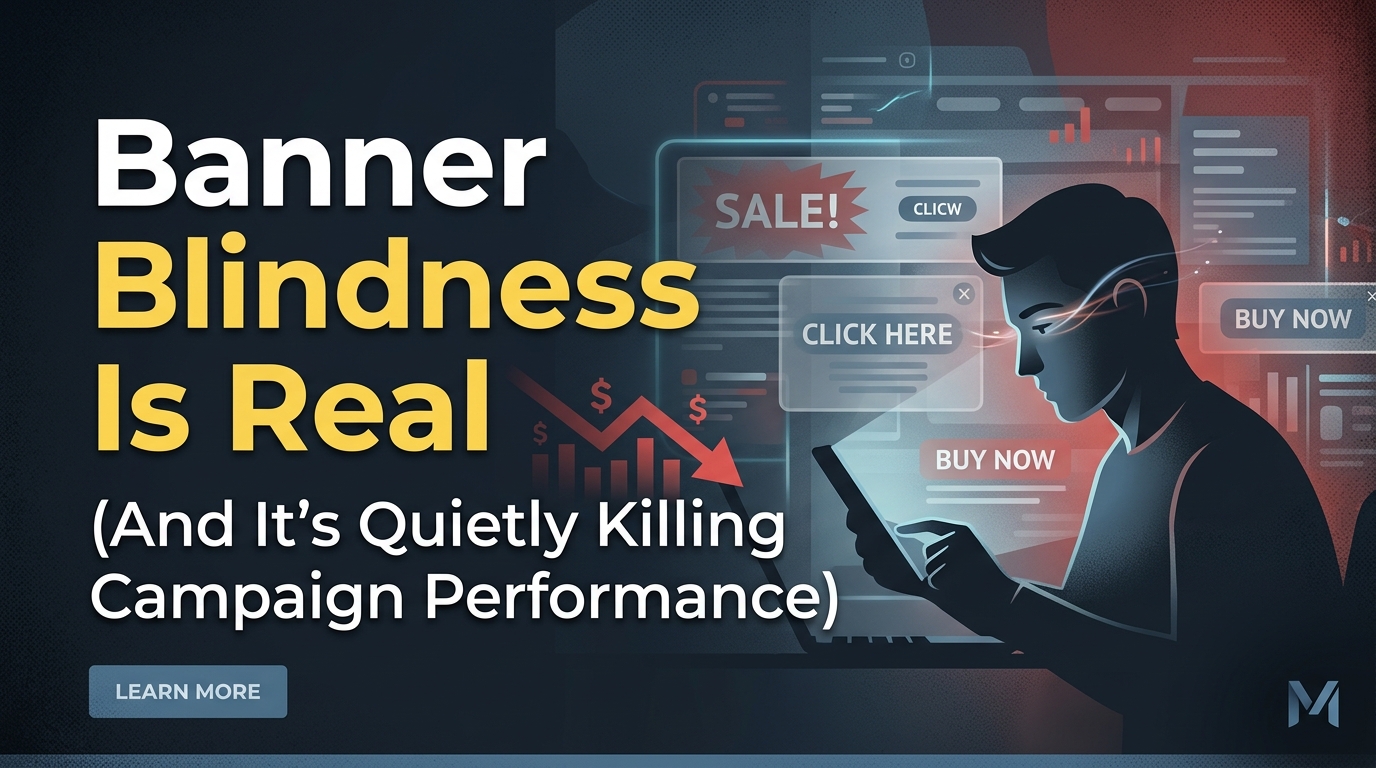
Most internet users don’t consciously avoid ads. They’ve simply trained themselves, over time, to tune them out. Headers and sidebars barely register anymore. Mid-content banners? Most people scroll right past them without thinking twice.
That’s banner blindness. And it’s one of the main reasons traditional display advertising struggles to scale—especially for affiliate marketers, media buyers, and brands running international campaigns.
So the real question isn’t whether ads work.
It’s when and how they show up.
Why the Old “Aggressive” Playbook Failed
If you’ve been in digital long enough, you remember what used to work.
Pop-ups that blocked the screen.
Forced clicks.
Interruptions everywhere.
For a short time, it printed money.
Then it destroyed user experience.
Ad blockers exploded.
Trust disappeared.
And brands paid the price.
Honestly, this is where a lot of advertisers still get stuck—trying to force attention instead of earning it. That approach doesn’t scale anymore.
Today, visibility still matters. But interruption doesn’t.
From Interrupting Users to Respecting Their Flow
Traditional display ads rely on breaking concentration. Someone is reading, watching, or researching—and the ad jumps in uninvited.
That’s not just annoying. It’s ineffective.
Modern performance marketing is less about interruption and more about flow.
Think about user behavior for a second.
People are most receptive during transitions. After they finish a task. When they’re closing tabs. When their attention resets.
That’s not theory. It’s observable behavior—and it’s why certain background formats have quietly regained traction over the past year or so.
The Subtle Power of Background Advertising
Here’s the part most people miss.
Some of the highest-performing ad formats today don’t fight for attention at all.
They wait for it.
Popunders are a good example.
Modern popunders don’t block content or hijack the screen. They load quietly behind the active browser window. The user continues browsing as usual. No interruption. No forced interaction. No broken experience.
Only after the main session ends does the ad appear—full screen, with no competition for attention.
That timing matters more than most creatives ever will.
When users see the offer, they’re no longer focused on what they were doing before. They’re in a break state. And in that moment, a full-page message lands very differently than a banner squeezed between paragraphs.
Clickunder formats work in a similar way, triggering background loads based on interaction while preserving the browsing flow.
We’ve seen consistently stronger engagement when these formats are handled correctly—especially compared to standard display placements that users barely notice anymore.
Why Experienced Media Buyers Are Reconsidering These Formats
As CPMs continue climbing across social and search, media buyers are being forced to diversify. Relying on one or two traffic sources just isn’t sustainable.
Background formats offer something that’s increasingly rare in 2026:
-
Scalable volume
-
Predictable delivery
-
Cost efficiency across Tier 1 and Tier 2 GEOs
That said, not all traffic is created equal.
The difference between success and failure here usually comes down to infrastructure.
Serious advertisers tend to work with established networks that specialize in popunder advertising, focusing not just on volume, but on filtering, compliance, and long-term campaign stability.
Without that foundation, even the best offer will burn out fast.
Matching the Format to the Right Vertical
Background formats aren’t a silver bullet. They don’t work equally well for every product.
Where they shine is in verticals that benefit from timing, impulse, or full-page visual impact.
Based on what we’ve seen recently, a few stand out:
iGaming and Entertainment
Users already browsing entertainment content are often open to discovering something new once their session ends.
Utilities and Software
VPNs, antivirus tools, and system software perform especially well here. The relevance is immediate when the browsing session finishes.
Finance and Trading (Crypto / Forex)
These offers require higher ROI to justify spend. A full-page canvas allows for clearer messaging than a standard banner ever could.
Sweepstakes and Lead Generation
When scale matters, undeniable visibility makes a difference—assuming frequency and quality are controlled.
The Rules That Make or Break These Campaigns
This is where most advertisers mess it up.
High-visibility formats demand discipline.
1. Frequency Capping Isn’t Optional
Showing the same full-page ad repeatedly doesn’t increase conversions—it creates frustration. Personally, I wouldn’t run these formats without strict caps. One exposure per user per 24 hours is often enough.
2. Traffic Quality Matters More Than Volume
High-volume formats attract bots if left unchecked. Any serious traffic source should be using layered filtering, AI-based detection, and manual review. If that’s missing, results won’t last.
3. Targeting Still Wins
Even with broad-reach formats, precision matters. GEOs, devices, and operating systems all perform differently. Campaigns that respect those differences tend to scale cleaner and longer.
Final Thoughts
Overcoming banner blindness doesn’t require inventing new ad tech.
It often means using existing formats in a smarter, more respectful way.
By aligning ad delivery with how users actually behave—rather than how we wish they behaved—advertisers can regain visibility without sacrificing experience.
The brands seeing sustainable ROI today aren’t relying on one channel. They’re building diversified ad mixes that balance standard display with high-impact background formats.
In an ecosystem that’s louder and more expensive than ever, that balance is what separates wasted spend from scalable growth.